or call us at (847) 220-1560
Experienced Religious Worker Visa Lawyer for R-1 Petitions
The R-1 religious worker visa has no annual cap and no lottery. What it has is a five-year limit and a green card backlog that regularly outlasts it. Our attorneys build each petition to keep the worker in status for as long as the process demands.
Book a Free ConsultationOur Approach
The R-1 Has a Five-Year Limit. Every Filing Decision Affects What Happens After
The R-1 temporary religious worker visa provides up to five years of authorized work in the U.S. It does not provide a path to permanent residency within that window. EB-4 priority dates are currently backlogged across all nationalities, and South Asian religious visa holders, including Hindu priests and Sikh granthis, are among the most affected by cases that outlast the R-1 window.
The Law Offices of Mary Kennedy, an immigration law office that handles religious worker immigration visa petitions for faith communities and organizations across the U.S. builds each case with the full immigration timeline in mind. The petition strategy and the religious worker green card pathway are planned together from the start, not addressed sequentially as deadlines arrive.

Services We Offer
Our Religious Worker Immigration Visa Services
The Law Offices of Mary Kennedy handles the following religious worker visa category.
- 01
Religious Worker Visa
The R-1 allows qualifying ministers and religious workers to serve temporarily in the U.S. under the sponsorship of a bona fide nonprofit religious organization. No annual cap applies and no lottery determines the outcome. USCIS conducts a mandatory on-site inspection as part of every R-1 adjudication. Our attorneys prepare both the organization and the worker before that inspection takes place.Know More
Religious Worker Visa (R-1)
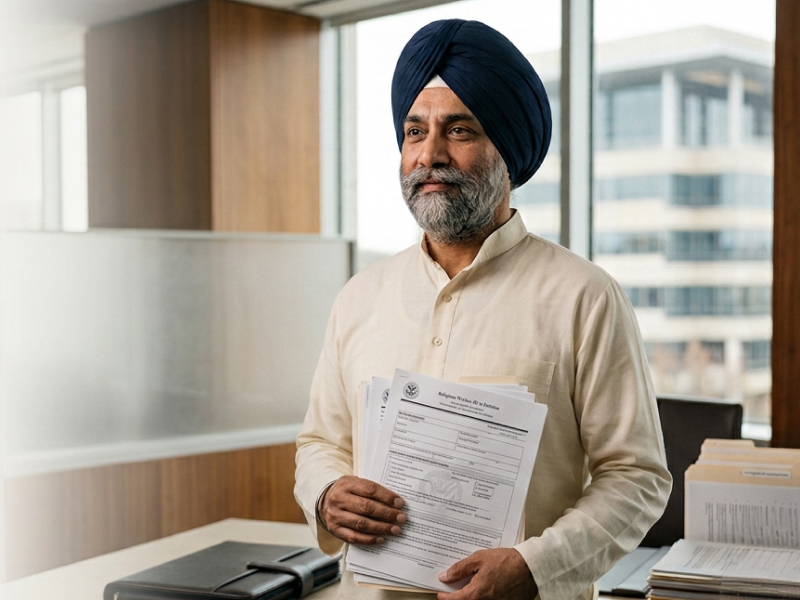
The R-1 allows qualifying ministers and religious workers to serve temporarily in the US under the sponsorship of a bona fide nonprofit religious organization. No annual cap applies and no lottery determines the outcome. USCIS conducts a mandatory on-site inspection as part of every R-1 adjudication. Our attorneys prepare both the organization and the worker before that inspection takes place.
Know More
Who Qualifies for the Religious Worker Visa?
The R-1 covers a defined range of religious roles. What matters is whether the position qualifies as a religious vocation or occupation — not whether the organization is large or well-known.
FAQ
Religious Worker VisaCommon Questions Answered
What is the difference between the R-1 visa and the EB-4 religious worker green card?
The R-1 authorizes temporary religious work in the U.S. for up to five years. It does not lead to permanent residency automatically. The EB-4 grants a religious worker green card and permanent resident status, but requires a separate petition process and is subject to priority date backlogs. Most religious workers enter on R-1 first to build the required qualifying employment before pursuing EB-4. For full details on the EB-4 permanent residency pathway, see our Permanent Resident page.
What is the difference between a minister and a non-minister for EB-4 purposes?
Ministers are authorized by a recognized denomination to conduct religious worship and perform clergy duties. Their EB-4 pathway is permanent, with no sunset date and no annual sub-cap beyond the overall EB-4 allocation. Non-ministers in recognized religious vocations qualify under a sunset provision that requires periodic reauthorization by Congress. Non-ministers with approved I-360 petitions should consult an attorney to confirm the current status of the provision before filing.
Why does USCIS conduct on-site inspections for R-1 petitions?
USCIS has broad authority to inspect sponsoring organizations before adjudication or after approval. Inspectors verify whether the organization genuinely operates as a nonprofit and whether the position, duties, and hours match what was petitioned. Organizations that cannot demonstrate active operations or a documented compensated position risk denial. Our religious worker visa attorneys prepare every sponsoring organization for a site visit before the petition is filed.
How does the current EB-4 backlog affect South Asian religious organizations?
EB-4 priority dates are currently backlogged across all nationalities rather than being concentrated in historically high-demand countries. For South Asian organizations sponsoring Hindu priests and Sikh granthis, EB-4 cases that previously resolved within the R-1 window now frequently exceed it. Filing Form I-360 as early as possible is the most important planning step available. The priority date established at filing determines the worker’s place in the queue regardless of how long adjudication subsequently takes.
What options exist when an R-1 worker's five years run out before the EB-4 is current?
Several options exist depending on the worker’s specific record and circumstances. A change of status to another qualifying nonimmigrant visa may allow continued U.S. presence while the EB-4 case advances. For workers who have built nationally recognized records in their religious tradition, the EB-1A extraordinary ability pathway offers permanent residency without the EB-4 backlog. Our attorneys assess each situation and recommend the most appropriate course before the R-1 limit is reached.

Ready to Take the Next Step?
Get trusted legal guidance tailored to your immigration journey.